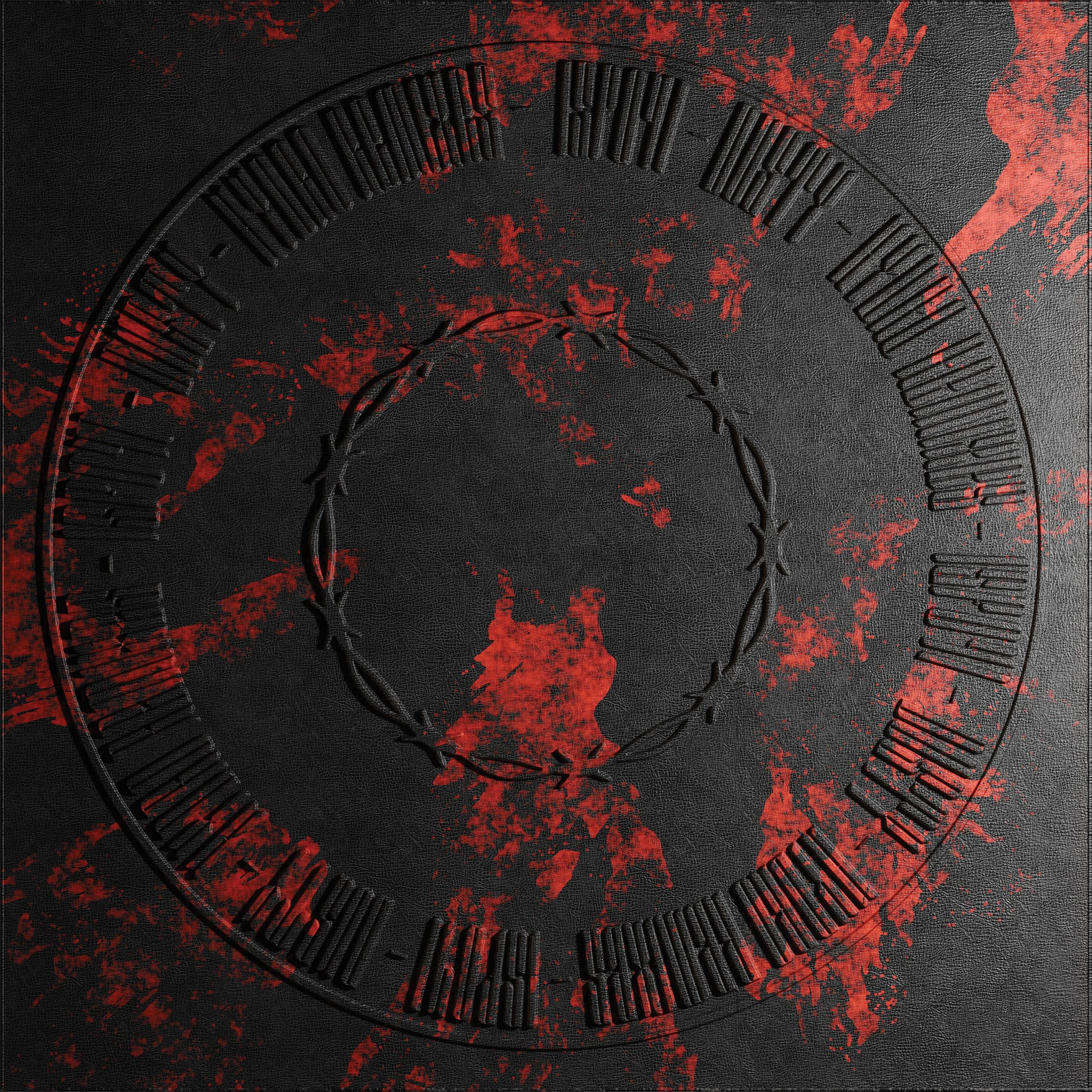
Dusty & Friends LP (#IFS041)
[IFSERA002]
DUST AND DEVOTION
The Shared Heartbeat of the Dance
- Sarah Styles
It’s Friday evening in Aotearoa, which means it’s well past midnight stateside.
On my end, a flight looms in a few hours and a laptop charger is barely reaching the wall. On his, there is a calm that makes logistics feel entirely irrelevant. Dusty—represented tonight by Lucas on the other end of the line—is buoyant, riding that distinct release-day energy with friends lining up plans for the night ahead. Yet there’s a warm, unhurried way he settles into the conversation that instantly shrinks the miles between us.
Now, with the clock finally zeroing out, Dusty & Friends has landed on Infernal Sounds. It’s a record that gathered momentum the way the best things usually do: slowly, naturally, and almost by accident. He’s still a little surprised by how it all fell into place. Before the boarding call and the night out took over, we plugged into that late-night current to trace how it all began.
☉☉☉

Lucas ½ of Dusty
How's release week treating you?
"I think a lot of relief," he says, almost before the question is out. "And just excitement with how everything came together."
He has earned the exhale. A multi-artist compilation of this scale is always a gamble—a delicate balancing act of strong, distinct sonic identities. The risk, as he saw it, was stylistic whiplash. But instead of forcing a uniform sound, he leaned into the collective genius of the lineup. "I really saw the bigger picture through some of these artists who I love so much," he says. "It was more like the best recollection of what the scene sounds like right now."
That collaborative ethos defined the entire process; the artists weren't just contributors, but stakeholders who shaped everything from the tracklist to the visual aesthetic. It was an egalitarian effort from day one. An exercise in patience, constant dialogue, and shared ownership over the final product. "When you get to the end of a road of putting together a project like this," he reflects, "you just wanna sit down, take a breather and just realise you're finally finished."
But if Lucas provided the initial spark, it was Infernal Sounds' founder, Drew, who built the structural architecture to hold it. "He's done an amazing job at really fitting all the puzzle pieces together," he notes, grateful for a label head who understood when to steer and when to grant total creative freedom.
☉☉☉
With this release featuring multiple artists, each with their own origin story — how do you measure and value their contributions towards this collection?
He pauses, and when he answers, there's something almost reverential in it.
"I'm just such a fan of the artists involved," Lucas shares. "Some of the artists — especially ones who inspired me to start making music in the first place — to be able to see them contribute to a collaborative project like this has just been so heartwarming."
The larger point, though, is about what the record champions beyond its individual components. "It's just a representation of what a community-focused sound can be like. There's no barrier between the languages we speak and the places we exist in. It's just we all enjoy the same facets of a sound system. And that's how it all works — 'cause we're all so invested in sound system culture."
It's worth sitting with: music made in small hours, in cities on opposite sides of the world, finding its way to the same room.
"It is such a universal language," I tell him. "I have such a deep appreciation for this because it becomes so spiritual in connection. Even just seeing a dance floor — how so many different walks of life can come together and be so in sync. On your end, you're the conductor of these experiences that tie people together."
He sits with that a moment, to a point where you can hear the grin settling in.
"Yeah," he says. "It's always surreal."
☉☉☉
Do you think online presence is important for fans to find you? How would you prefer the community to engage with your project? Is word of mouth enough?
"I still believe in the word of mouth," Lucas says, without hesitation. "I think it's still the most powerful tool — because word of mouth insinuates that you're actually talking to someone in real time."
Across thousands of miles and different clocks, that conversation starts there. And in a world of endless noise, that physical dancefloor is exactly where this compilation lives.
Navigating the digital world comes with a healthy dose of realism, and a bit of unease. “There's no denying the fact that social media is unfortunately the strongest tool we have to reach a wider audience these days. And I don't know how I feel about it.”
But his instinct runs in a different direction, back toward something older. Dubstep grew from local networks in a way that feels almost countercultural now. He found himself recently scrolling through the original DMZ website, a period of reminiscing that brought his gaze onto a foundational UK dubstep club night. What he found there stopped him.
"All it was was the poster of the upcoming night. And maybe some hyperlinks to their latest release. There was no photo of the artist or what they were eating for dinner that night, or what their opinion on sport was. It was just — this is all we need. What's the sound system? Where is it? Do I recognise it? Is it gonna be a fun night?"
Against all odds, dubstep still operates on that intimate frequency. That seemingly ancient, subcultural blueprint still dictates how the music functions today. Lucas points to the crowd itself as proof. "You go to raves and you see a packed dance floor and it's genuinely full of people you would want to talk to, if not already met." To him, no algorithm can replicate that physical connection. "Sharing the music with the people nearest to you — that's the most human thing you can do."
☉☉☉
Why did you pick your name? How did one half become whole? Why did you decide to play the genres you do?
The question hangs in the late-night quiet for a second. A warm, reflective note enters his voice as he leans into the history.
"It starts with myself, Lucas, and my brother, Dylan. We're bloodborne brothers at the end of the day." The duo began not in a studio or through a label, but through something simpler: an older brother taking a younger brother to raves. "That was how we connected. We'd go out to sessions and stay up too late."
The name came from those mornings after. There's a particular feeling — bleary-eyed, ears still ringing — that people in this world know well enough to have a word for. "People often say, you look a bit dusty." And it was in exactly that condition that the music tended to happen. "We would just be sitting out at the pub at the end of the night, talking about the sounds that we'd heard and the artists that we enjoyed, and thinking about all the sounds that we were excited to create together in the studio the next day."
"Every time we were in the studio together it was after being so heavily inspired from a big night out at a sound system. We spent long nights out together, came home, got inspired, and then music was created."
It’s a detail that usually catches people off guard: the two brothers don't share a last name. Lucas reacts with an amused nod at the mention of it. “That’s rare knowledge right there.” He nods to Skream and Hijak—one of the scene's most legendary foundational duos—who share the exact same family twist. “People are always like, what?” He admits, taking a quiet pride in the parallel.
☉☉☉

Lucas & Dylan
☉☉☉
Are there artists, collectives, or stations in Aotearoa that people outside New Zealand should know about?
Lucas takes a breath, scanning the local landscape before deciding where to start.
First, there is Ayaluna. "Absolute badass — one of the most talented producers. Ayaluna was featured on White Peach recently for some vocal elements and has really expanded their sound into all territories of genre. From there, the spotlight moves to Tāmaki (Auckland) to highlight No Harm, a producer who, alongside partner and fellow artist Gristle, represents the absolute best of the community's spirit. They’ve been showcasing incredible, experimental aesthetics in sound system music lately, running an independent imprint called Structurally Unsound that is mandatory listening for anyone looking to push the boundaries of the genre.
Then he points to Radioactive FM, a local station that has been representing independent electronic music for roughly forty years. "Small grassroots stations like that all across the country — they're like a first step to showcasing your music out in the world."
The geography shifts south to Ōtautahi (Christchurch), where Eerie has been pushing the envelope with the label Mimic. Eerie is a long-time friend and co-collaborator of Lucas's own crew’s dubstep night, DNG—"don’t ask me what it stands for," he adds in a quick aside. Without a doubt, Eerie stands as one of the most dedicated producers crafting fresh takes on bass music in the South Island right now.
And then, staying in his own backyard, there is Sano. His voice shifts slightly when he says the name. "I think Sano is super underrated. Sano carries such a weight in our Aotearoa scene just for the dubstep sound. It's always so exciting being in the studio with Sano and just realising that this is probably the best artist in the whole city right now. And nobody knows about it yet."
But there's a larger point underneath all the names. "Taking a look at local artists from minority scenes and minority backgrounds is really important — it's so dominated by [you guessed it], without getting too political, there’s the obvious answer to who really dominates these spaces."
He wants to see more Māori and Pasifika artists. More queer artists. More of the subcultures that are, as he puts it, doing the actual heavy lifting for the underground. "The most underrepresented communities in our country are the ones who have the most creative and inspiring music and messages to say. It's almost the answer — going back to promoters — that the talent is right on your doorstep."
☉☉☉
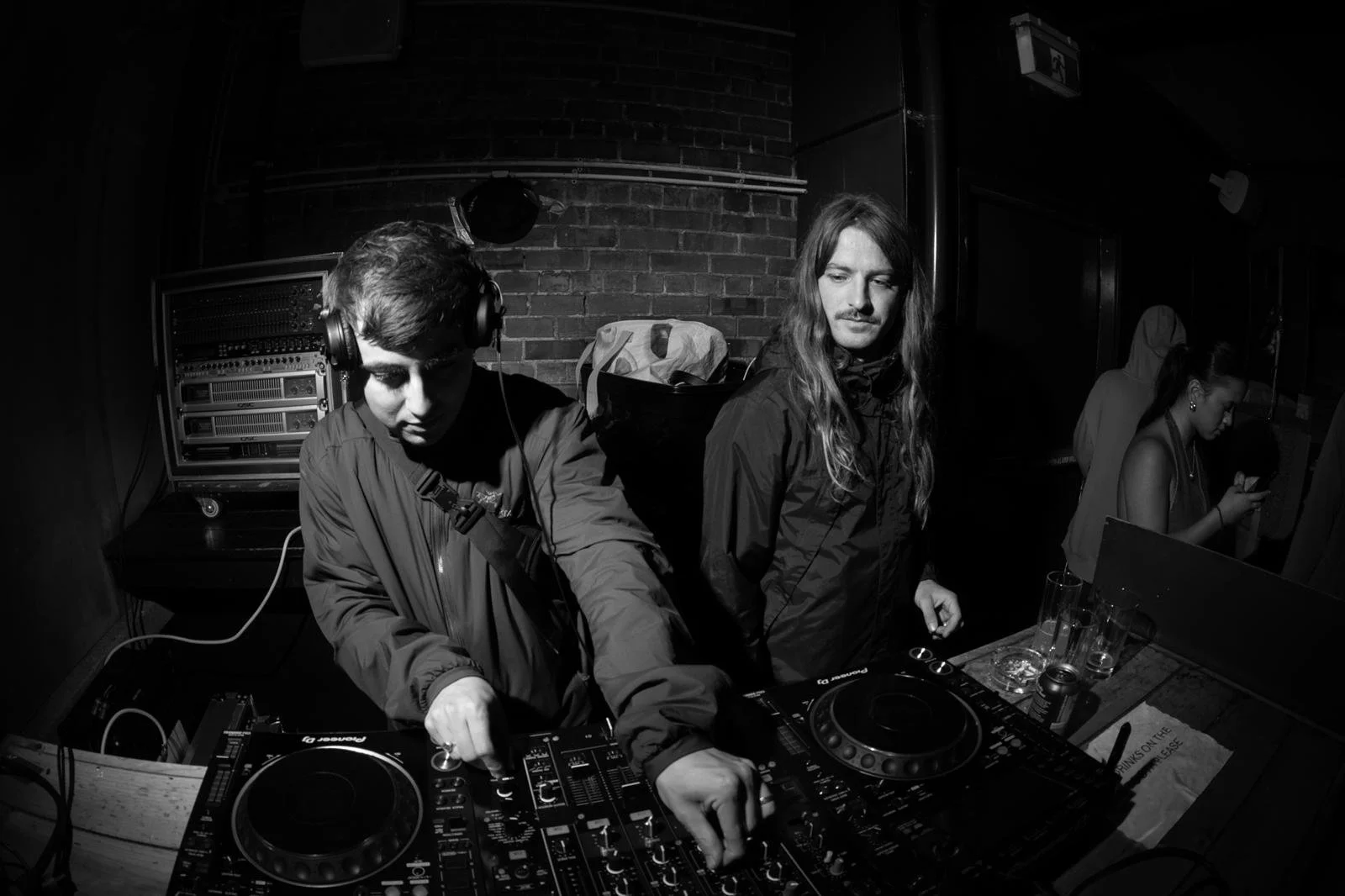
Dusty & Sano
☉☉☉
How has your understanding of your own identity changed through the music you create or listen to?
"Sound system music is just so important to both of us," he says, "and I think it represents more than even the people around us. It's such an immediate connection to a message and a movement and a cause."
Remove the industry ambitions and the music becomes something purer: a devotion. If the production stopped, their involvement wouldn't; the brothers are fixtures of the scene first, creators second. What Dusty makes is simply a love letter back to the dances that raised them. "That journey," he says, with a sudden, striking note of humility, "has surprisingly resulted in some people enjoying that sound that we make."
It’s spoken without a shred of posture. Even now, with the release live, the fact that their internal world resonates with an audience still feels like a beautiful accident.
☉☉☉
Do you think audiences project political meaning onto music more than artists intentionally place it there?
"I think people connect to music for what means the most to them," he muses. "And it is just amazing that somehow the dubstep scene is by and large on the same page when it comes to how we see the world."
Lucas is clear on where he stands: dubstep is inherently political. Not just in lyrical content, but in sound itself. "There's always been a strong message in dubstep music that if not represented by words, it's absolutely represented by its sonics. It almost sounds like a protest to a lot of the more conventional normativities of electronic music. And it ties back to the fact that it comes from Black music — there's such a strong message through suffrage music and roots music, and the journey of sound system culture into what it's become today. Dubstep still holds such an awesome connection directly to it."
Music is also its own kind of history lesson — and not everyone enters it from the same direction. "I see fans that are very, very engaged with a certain artist, but their level of understanding varies depending on how they were initially exposed," I offer. "But typically they become very enlightened once they're privy to another side of the very same thing they've been so passionate about."
There's a moment here where the conversation gets personal. I share a memory — a university class on the history of rock music, the connections between genres and their roots in Black culture, being seventeen and trying to hold two things at once. My experience growing up was that being Black was always framed as less than — that we would always have to fight to be recognised. In the way that we are perceived, our existence goes against the fabric of nature. No one wants to be part of our culture as our race has no place in society’s standards. And then to find that our presence is at the very centre of so much of what the world calls its own music — to find that we had quietly been foundational all along. That was a really big leap for me to even embrace that part of myself to see that.
Lucas doesn't miss a beat. "Or fetishise it. It's either one or the other, right?"
He holds the thread steady. "As long as you understand the historical context of the music you're involved with, it gives you a better choice on how you're gonna move forward being involved with it. We choose the right records to play at the end of the day."
☉☉☉
Do you follow a process or ritual before getting locked in the studio?
Pulling back the curtain on the creative process reveals less of a strict ritual and more of an unpredictable mental landscape. Lucas skips the usual talk of cigarettes or coffee, choosing instead to look at how his brain is wired for the creative trance. It turns out, the way the studio locks him in is just another branch of the family tree.
"I am the only person in my family who's not clinically diagnosed with ADHD," he says. "So the best way I could describe it is — I just haven't gone to a psychiatrist yet."
He's joking. Mostly. "I'll open up my Ableton or open up a DAW and the next moment I've looked at the time and either five minutes have gone by and I've done nothing or eight hours have passed and I've just written a whole EP. You never know, unfortunately, when inspiration will strike."
What he does know is where that spark is found. The true ritual is just being an active part of the ecosystem—heading out to a dance, catching a contact high from the bass, and coming home to create. "I'm most keen to get in the studio when I've been able to experience a sound system, really. It still holds strong, we're just most inspired when we've been around our friends and our crew." That raw inspiration is the foundational DNA of the project.
The conversation drifts, naturally, into a wider meditation on what a sound system actually offers — and what gets lost when the show becomes a spectacle. He describes a night in Melbourne, a collective called Sketch, an out-of-town venue with minimal staging. One or two lights. But food outside, space for families, room to breathe. "The main focus was the sound, the bar, and the food. The best part about original sound system culture is it's at your own leisure — at your own pace, how you wanna enjoy the night."
He sets this against the over-produced spectacle that passes for a night out now — the VJ lineups, the LED walls, the sensory overload. "When you go to a sound system session there's maybe one light above the DJ and just one record and someone toasting, and you get the full experience as it comes. You're not overstimulated the entire time. You actually get to sit back and enjoy what's happening. You actually come away from it remembering what you heard."
"That's exactly why I travel for music," I tell him. "In the States, there’s such a massive emphasis on production and aesthetics. Personally, I just want enough bathrooms and maybe some food at the venue. The only infrastructure that actually matters is the sound system. I'm a simple girl."
The sentiment clearly strikes a chord on his end. "Yeah. Absolutely."
☉☉☉
Is there something you think people should know more about this release — or about you — that they wouldn't have been able to learn if it wasn't for this interview?
"It genuinely started with sharing the original EP around with some of my greatest inspirations in the scene," he says. "And it came about completely spontaneously."
Most label compilation projects are pre-engineered, the roster assembled deliberately, the brief distributed in advance. This wasn't that. "Labels tend to pre-orchestrate their own internal roster — a various artists EP, a remix package, something like that. But this came across completely by accident."
The catalyst was a surprise message from WZ, a producer Lucas had quietly admired for years, asking to remix Desolate. "I was just blown away that a producer like WZ would be so interested as to take that on." From there, the project snowballed. "I'm still in a bit of shock that we've managed to put together such an awesome, unified body of work so seamlessly."
The credit, he notes, belongs to the conceptual freedom Drew grants at Infernal Sounds. "He gives so much leverage to his artists to explore ideas and just put things out there. Infernal Sounds really takes its time to craft the right release. It gives you space, as an artist, to understand what you want out of the music you're putting out."
"Infernal Sounds is just gonna be the family forever," he states softly. It’s spoken not as a casual compliment, but as a definitive promise for the road ahead.
☉☉☉
Are you stuck on a particular tune or song at the moment that you'd like to share?
An instant brightness hits his expression. This is not the answer anyone is expecting.
Rather than a glossy new release, Lucas has been buried in the archives, specifically the legendary FWD>> mixes from the mid-to-late 2000s. He’s currently obsessed with a chaotic, brilliant snippet he’s trying to loop into a new production.
The source is an old Riko Dan set over a Youngsta riddim, where the performance shifts from a standard MC set into something entirely human. "He keeps forgetting his lyrics and keeps asking for another drink," Lucas says, completely charmed by the memory. "It progressively just gets more entertaining. It's more like a comedy session at the end—he's not even MCing at that point, he's just talking with the crowd. You just hear it become more and more funny and entertaining, and they're just having such a laugh with it."
There is a beautiful, cyclical poetry to where the conversation leaves us. Two decades ago, across an ocean, a pirate radio broadcast caught a fleeting moment of pure dancefloor humanity—the crackle of static, a room full of people having a laugh, and an MC completely letting go of the script. Today, that forgotten moment is spinning in the mind of a producer on the other side of the world, transforming the foundation for something entirely new.
It is a fitting image to close on. Someone deep in the archives, still moved enough by a twenty-year-old recording to want to carry it forward. It proves what Lucas asserted at the very beginning: this music was never about a career. It is an inheritance.
☉☉☉
Sound system culture is often historicized by its weight… the heavy roll of sub-bass, the towering speaker stacks, the serious devotion of the dance. But to sit with Lucas is to remember that beneath the bone-rattling frequencies lies something incredibly light, human, and joyful. The brothers aren’t trying to build a sterile monument to their own talent; Dusty is crate-digging for a feeling, looking for the communal spark that makes a room full of strangers feel like family.
With this new LP, the duo and the Infernal Sounds family have mirrored that exact sentiment, turning a high-risk logistical puzzle into a harmonious testament to the modern scene. It stands as a love letter to the foundational sounds that came before, written by an artist who is still genuinely astonished that the room is listening back. The dance goes on, the lineage deepens, and Dusty is right there in the middle of it—keeping the fire burning for whoever walks through the venue doors next.